Electric Car Icons: A Designer's Review for Stitching
As a designer who spends half my life staring at screens and the other half threading needles, I approach digital assets with a specific kind of skepticism. We see thousands of Graphics every day, but very few translate well from a pixel-perfect vector to a tangible machine embroidery design. When I first pulled up the Electric Car Icons pack, my immediate reaction was one of cautious optimism. The description promises a "simple and clean icon design," which is music to an embroiderer's ears. In our world, simple often means successful, whereas complex usually means a nightmare of thread breaks and puckering.
The Visual Personality and First Impressions
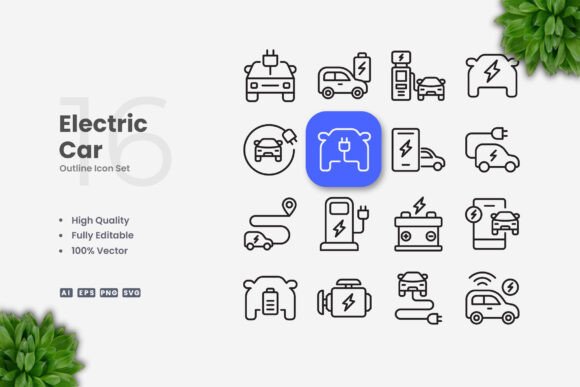
The first thing that strikes you about the Electric Car Icons is their modern, minimalist aesthetic. These aren't cluttered illustrations trying to show every bolt and headlight; they are stylized representations that capture the essence of electric mobility. The lines are crisp, and the shapes are distinct. For a digital product seller or an Etsy seller looking to create printable mockups, this clarity is invaluable. However, my job is to look past the screen and imagine the thread.
The mood these Icons create is forward-thinking and eco-conscious. They feel at home on contemporary custom apparel or sleek tech accessories. The layout suggests versatility. Because the design relies on strong silhouettes rather than intricate internal detailing, it has the potential to perform exceptionally well as a satin stitch outline or a clean fill stitch block. This visual personality tells me that the design is intended for impact rather than subtlety, making it a strong candidate for branding elements on small shop products.
Real-World Application: The Eco-Friendly Tote Project
To truly evaluate the Electric Car Icons, I envisioned a specific real-life scenario: a custom order for a local green energy startup. They needed branded tote bag designs for an upcoming conference. The client wanted something that looked professional but also handmade and authentic. This is where the rubber meets the road, or in this case, where the needle meets the fabric.
I imagined stitching these icons onto a heavy canvas tote. The simplicity of the design would allow the texture of the canvas to shine through without getting lost. If I were to use a dense stitch density, the bag might become too stiff, but with these cleaner lines, I could opt for a lighter fill or even a double running stitch for a sketch-like effect. The result would be a handmade product that feels premium. Customers receiving these bags would likely appreciate the thoughtful execution; the icon communicates values instantly, enhancing brand consistency and trust.
Beyond totes, I can see these working beautifully on sweatshirt embroidery. Imagine a unisex hoodie in heather grey with a small chest logo using one of these car icons. It's understated yet recognizable. For baby embroidery, perhaps on a onesie for an earth-conscious parent, the rounded, friendly shapes of the electric cars would be perfect, provided the scale is adjusted correctly for the tiny garment.
Versatility Across Products and Materials
The strength of the Electric Car Icons lies in their adaptability. They are not just limited to clothing. I can easily picture them as the centerpiece of an embroidered patch, which could then be ironed or sewn onto jackets, backpacks, or hats. Patches are a huge market for craft business owners, and a clean icon like this reduces the risk of production errors.
For home decor, these graphics could adorn pillow covers or tea towels. A set of kitchen towels featuring different EV models could be a unique holiday gift or a clever housewarming present for the tech-savvy friend. Even in the realm of commercial embroidery, such as uniform branding for a charging station technician, these icons offer a professional look that avoids the cheap feel of overly clip-art-style images.
Technical Considerations and Potential Pitfalls
While the design is promising, a responsible reviewer must address the challenges. The description notes that you can "resize, change color, or edit stroke weight," which implies these are likely vector-based source files before being digitized into an embroidery file. This is crucial. You cannot simply shrink a design meant for a poster down to a small hoop size without consequences.
If you are planning to stitch these on stretchy fabric like jersey knit or on curved surfaces like caps, you need to be extremely careful with the stitch count and density. Thin lines that look great on a monitor can vanish or break when stitched too small on a textured surface. Dark fabrics present another challenge; if the icon relies on negative space or very fine outlines, ensure your thread colors provide enough contrast. A dark navy car on a black sweatshirt will disappear unless you use a metallic or lighter accent thread.
Furthermore, frequent washing is a reality for custom apparel. Dense areas in the design, if any exist in the digitized version, must be properly underlaid to prevent shifting. If the design includes tiny details that mimic headlights or charging ports, these might become muddy after a few wash cycles if the stabilizer isn't chosen correctly. Always test on scrap fabric first. What looks good in the hoop might pucker once removed.
Maximizing Value and Professionalism
Using high-quality assets like Electric Car Icons directly affects your perceived value. When a customer sees a clean, well-executed design, they associate that quality with your entire brand. It builds customer trust. Conversely, a poorly stitched or ill-chosen graphic can make a finished product look amateurish. These icons, with their professional demeanor, help elevate the presentation of your work.
For digital product sellers, these graphics serve as excellent design assets for creating listings. Even if you aren't stitching them yourself, having access to clean icons allows you to create realistic printable mockups that sell the dream of the final product. For the maker selling at craft fairs, having a cohesive set of icons allows for a unified booth display, making your table look more curated and professional.
Final Verdict and Designer Notes
The Electric Car Icons pack is a solid resource for anyone looking to tap into the growing market of eco-friendly and tech-focused goods. Its "simple and clean" nature is its greatest asset for embroidery, reducing the likelihood of technical failures while maintaining high visual appeal. However, success depends entirely on how you prepare the file for the machine.
Before committing to a production run, here are my practical notes:
- Check the License: The description mentions usage for websites and print, but always confirm the terms for commercial embroidery and resale of finished physical items.
- Digitize with Care: If these are vectors, ensure your digitizer (or you) converts them with appropriate stitch types. Avoid automatic digitizing for critical client work.
- Test Contrast: Run tests on both light and dark backgrounds. A design that pops on white might fail on charcoal.
- Mind the Scale: Do not assume the design works at 1 inch just because it works at 10 inches. Small details may need to be simplified or removed for tiny applications like baby clothes.
- Stabilizer Selection: Match your stabilizer to the fabric weight, not just the design. A heavy design on a light shirt requires a cut-away stabilizer to prevent sagging.
In conclusion, the Electric Car Icons offer a versatile foundation for a wide range of projects, from boutique apparel decorators to hobbyists making personalized gifts. With the right preparation and attention to the realities of thread and fabric, these graphics can be transformed into stunning, durable, and marketable embroidery pieces.